“This article draws on the information presented in “ The Chronicles of Kashmir.” by Sh. Balkrishan Sanyasi; Biography of Pandit A N Vaishnavi.”
In the turbulent decades preceding the exodus of Kashmiri Pandits, one man emerged as a voice of clarity, courage, and conviction—Pandit Amarnath Vaishnavi. From the early 1980s through the mid-1980s, he played a pivotal role in countering the growing menace of radicalism and communal strife in Jammu & Kashmir. Through activism, grassroots outreach, and fearless political engagement, he became a resolute defender of India’s unity and the rights of Kashmiri Hindus.
Appointed VHP Pracharak in Jammu Province (1983–1986)
In April 1983, recognizing his unwavering dedication and nationalist spirit, the RSS central leadership appointed Pandit Vaishnavi as a Pracharak of the Vishwa Hindu Parishad (VHP) for the Jammu region.
This role saw him tirelessly traverse remote villages and towns, addressing the grievances of marginalized communities and reinforcing the values of social cohesion and national integrity. His outreach wasn’t limited to Hindus alone—he actively worked to build communal harmony, even as tensions simmered in the Valley.
Head of Balidani Jutha During Punjab Insurgency (1984)
In 1984, amid rising militancy in Punjab, the RSS entrusted him with a national responsibility: leading the “Balidani Jutha” (Martyrs’ Group) for Jammu & Kashmir.
This group, operating at great personal risk, toured militant-dominated areas of Punjab. Their mission was clear: to restore morale, instil courage, and remind people of India’s pluralistic identity. They were met with open hostility from separatists, yet Vaishnavi’s team remained undeterred.

The Political Unravelling of Kashmir: 1983–1987
The year 1983 marked the beginning of a new era of political instability in Jammu and Kashmir, triggered by a major split within the National Conference, the party founded by Sheikh Mohammad Abdullah and then headed by his son, Dr. Farooq Abdullah.
This internal division gave rise to a breakaway faction called the Inqalabi National Conference, led by Shri Ghulam Mohammad Shah, Sheikh Abdullah’s son-in-law. The rift deepened the already fragile political landscape and created new openings for opportunistic alliances and ideological extremism.
Amidst this turbulence, Dr. Farooq Abdullah aligned himself with Moulvi Mohammad Farooq, the chairman of the Awami Action Committee, a political outfit known for its pro-Pakistani leanings. This controversial accord in 1985 was seen as a tactical move to consolidate influence, but it also signalled a dangerous shift in regional politics—where the lines between religion and governance began to blur more overtly.
Later that year, Dr. Abdullah’s government was dismissed, and G.M. Shah assumed power as the new Chief Minister. However, his government struggled to assert authority and failed to maintain communal harmony. Lawlessness and factionalism intensified, and within a short period, the state was placed under Governor’s Rule, with Shri Jagmohan appointed as the Governor of Jammu and Kashmir.
A Brazen Challenge to Secular Order: The Lal Chowk Incident
During Governor Jagmohan’s tenure, a highly provocative act was allegedly orchestrated by Qazi Nisar, a fiery Islamic cleric from South Kashmir. On Janmashtami, the sacred birthday of Lord Krishna, Qazi Nisar reportedly organized the slaughter of a cow at Lal Chowk in Anantnag, directly violating the Governor’s public appeal to abattoirs to halt animal slaughter that day in respect of the Hindu festival.
This was not just a religious provocation—it was a symbolic challenge to the authority of the Indian state and a signal that sectarian sentiments were being mobilized deliberately to marginalize minorities and assert majority dominance in public discourse. It marked a turning point in the communal atmosphere of the Valley, where once sporadic tensions began to take on a sustained and organized form.
The Rise of the Muslim United Front (MUF)
Out of this deepening polarization emerged a strong Islamic political front—the Muslim United Front (MUF)—in the early months of 1987. The MUF brought together various Islamic groups under a single umbrella, determined to challenge both mainstream political power and the existing secular framework of governance in the state.
In the 1987 State Assembly elections, the MUF contested with enthusiasm and widespread support, particularly among youth. However, the elections were widely perceived to have been rigged by the ruling National Conference led by Dr. Farooq Abdullah, in alleged collaboration with elements in the central government.
Despite its popular base, the MUF was defeated. The National Conference returned to power, but the mood in the Valley turned sullen and defiant. The disenfranchisement of MUF supporters, particularly the youth, planted the seeds of separatist militancy. Many of those involved with the MUF would later become key figures in the armed insurgency that erupted in the 1990s.
The 1986 Communal Violence and Vaishnavi’s Protest
The communal atmosphere worsened rapidly. In February 1986, violent riots broke out in South Kashmir, engulfing villages such as Dhanav, Bugom, Khudwani, and Vanpoh, and extending to Sopore in North Kashmir.
Hindu homes were torched, temples desecrated, and local Pandit families were targeted. Pandit Amarnath Vaishnavi, then a senior activist and community leader, witnessed the unfolding crisis with grave concern. The administration under Chief Minister G.M. Shah failed to rein in the aggressors or offer protection to the minority communities.
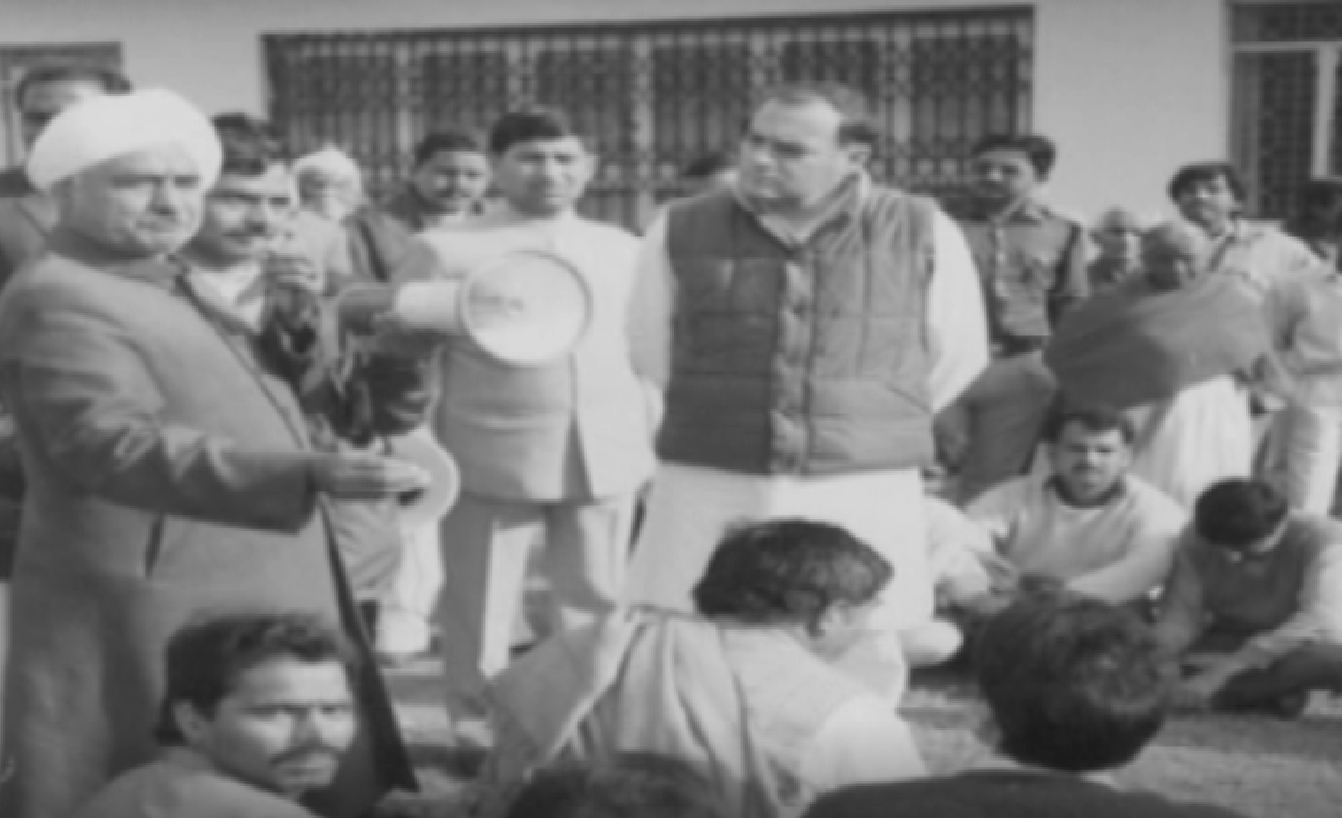
In response, Pandit Vaishnavi led a massive protest demonstration in Jammu in February 1986, condemning both the state government’s apathy and the targeted communal aggression. The demonstration, however, was met with a brutal police lathi charge, and Vaishnavi narrowly escaped serious injury.
His leadership during this period symbolized resistance amidst betrayal, as he stood up for the dignity and safety of the Kashmiri Hindu community, even as the political establishment chose silence or complicity.
This series of events—from the political fragmentation of the National Conference to the rise of communal and separatist ideologies, and the violent targeting of minorities in 1986—form the backdrop of the greater tragedy that would follow in 1990.
Warning Signs of Radicalization and National Vigilance
During this period, Vaishnavi began to publicly share insights gathered from years of grassroots monitoring. He referred to youth networks like the Vivekananda Society, trained to watch village streets for suspicious activity. His warnings were prescient: as early as 1968, he had noted efforts by radical groups to indoctrinate Kashmiri Muslim youth into anti-national ideologies.
After the 1965 Indo-Pak war, Vaishnavi observed how foreign-funded Islamist organizations quietly began to indoctrinate Kashmiri Muslim youth, setting the stage for ideological warfare.
His findings found disturbing validation with the exposure of Operation TOPAC—a detailed Pakistani plan allegedly scripted by General Zia-ul-Haq, aiming to:
- Radicalize Kashmiri youth
- Destabilize the Indian state from within
- Gradually purge the Valley of its Hindu population
Kashmiri Pandit Leadership Meets – A Chorus of Alarm (1986)
In the aftermath of the 1986 riots, a series of high-level emergency meetings were convened by Kashmiri Pandit leaders. One was held in Srinagar and the other in Jammu (May 1986). Pandit Vaishnavi played a key role in shaping the community’s response.
These gatherings included esteemed voices like Pandit Prem Nath Bhat, Pandit Harji Lal Jad, Pandit Amar Nath Ganjoo and Pandit Pushkar Nath Karnal, among many others.
The forums unanimously condemned the rising violence, desecration of temples, and clearly saw the beginning of an orchestrated ethnic cleansing. Vaishnavi’s call for organized resistance and national intervention grew louder.
Delhi Mission: Meeting the President and Prime Minister (June 1986)
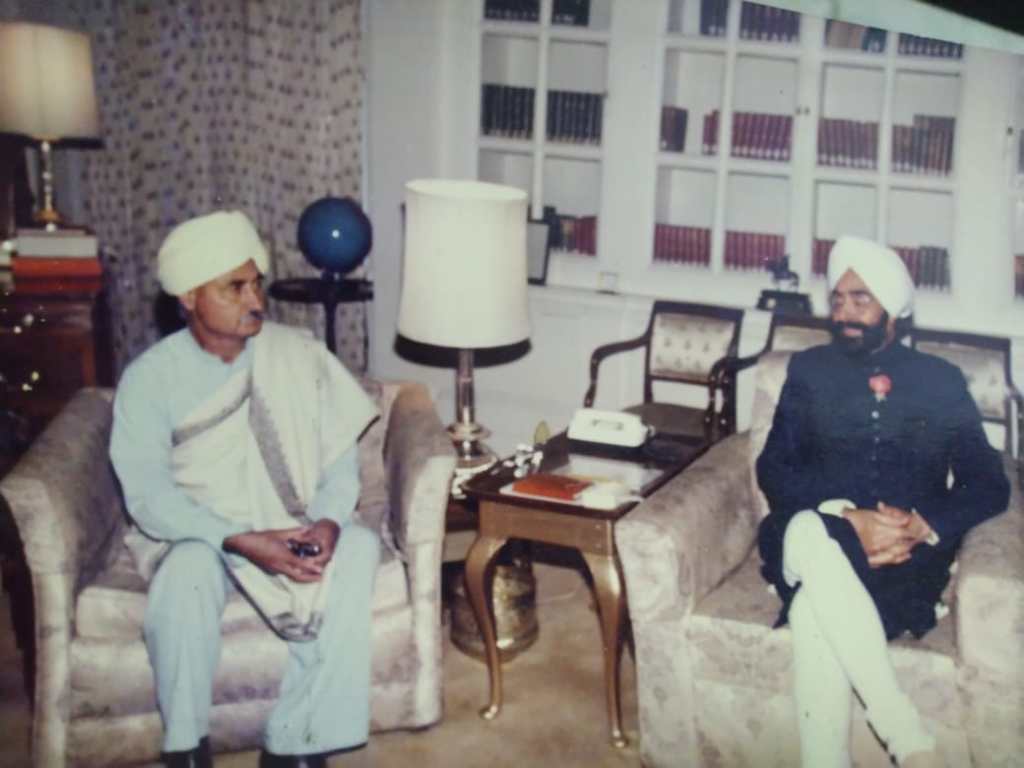
Realizing the urgency, a delegation of Kashmiri Hindus, led by Pandit Amarnath Vaishnavi, was formed with support from RSS and Arya Samaj leadership in Delhi. Alongside Pandit Hira Lal Chatta and Shri Ram Gopal Shawl vale, Vaishnavi met Prime Minister Mr.Rajiv Gandhi and President Mr. Giani Zail Singh.
He warned them, in no uncertain terms, that Kashmir was on the brink—and that if the pro-India voices were silenced, separatism would take full control.
In a deeply disheartening moment, Prime Minister Rajiv Gandhi reportedly dismissed the concerns, saying:
“Nothing worst would happen in Kashmir.”
Backlash and Press Conference in Jammu
Upon return, the delegation held a press conference in Jammu, expressing frustration with the central government’s apathy. Vaishnavi delivered a scathing indictment:
“Alas! New Delhi has never been able to believe those from Jammu and Kashmir whose voice is patriotic.”
It was a prophetic statement. Within four years, the worst fears articulated by Vaishnavi and his colleagues would manifest in the form of mass ethnic cleansing and exodus of Kashmiri Pandits in 1990.
Legacy of a Forgotten Warrior
Pandit Amarnath Vaishnavi remains a moral giant and unsung sentinel of modern Kashmir’s political history. He:
- Warned the nation when few would listen,
- Stood up when many chose silence,
- And embraced a life of sacrifice for a cause greater than himself.
At a time when the Kashmiri Hindu voice was being systematically silenced, he stood tall—as a spokesman, a sage, and a soldier of civil resistance.
His story is not just a chapter in Kashmiri history.
It is a lesson in courage, a case study in foresight, and a tribute to a man who chose truth over personal comfort.
 Amarnath Vaishnavi Foundation